Potassium Is Vital! 15 Best Potassium Rich Foods, Benefits & Food Chart. Often, when people talk about keeping their bodies healthy, minerals like potassium tend to be overlooked. However, getting enough of your body’s minerals, particularly through potassium foods, is essential for optimal heart health and keeping your blood pressure at healthy levels. To help you keep healthy heart and stay your heart ticking, we’re here to discuss the 15 best potassium rich foods for and tell you actual benefit you get from this important mineral.
Why Potassium Matters: The Science Behind Potassium Benefits
Potassium is an essential nutrient and electrolyte your body needs to operate efficiently. It’s crucial for fluid balancing, muscle contractions, and signaling through the nervous system. Above all else, this vital nutrient in your diet also works to counteract the impact of sodium on the body. It can support lower blood pressure levels and decreased odds of strokes, kidney stones, and osteoporosis.
The American Heart Association advises eating a high-potassium diet that consists of potassium-rich foods to help you maintain heart health by relaxing blood vessel walls and eliminating excess sodium through urine. This is why many lists of heart-healthy foods emphasize potassium content.
Key Potassium Benefits:
- Supports heart health and normal heart rhythm
- Helps maintain healthy blood pressure
- Balances fluids in the body
- Aids in muscle and nerve function
- Reduces risk of stroke
How Much Potassium Do You Need?
The amount of potassium recommended for adults each day can vary, but it’s typically somewhere in the 2,500mg to 3,400mg range, depending on your age, sex, and stage of life. Unfortunately for most of us, we’re not currently consuming adequate levels of potassium in our food, which reinforces the need to increase the amount of high-potassium foods in our diets.
The Ultimate Potassium Foods List: 15 Potassium Rich Foods
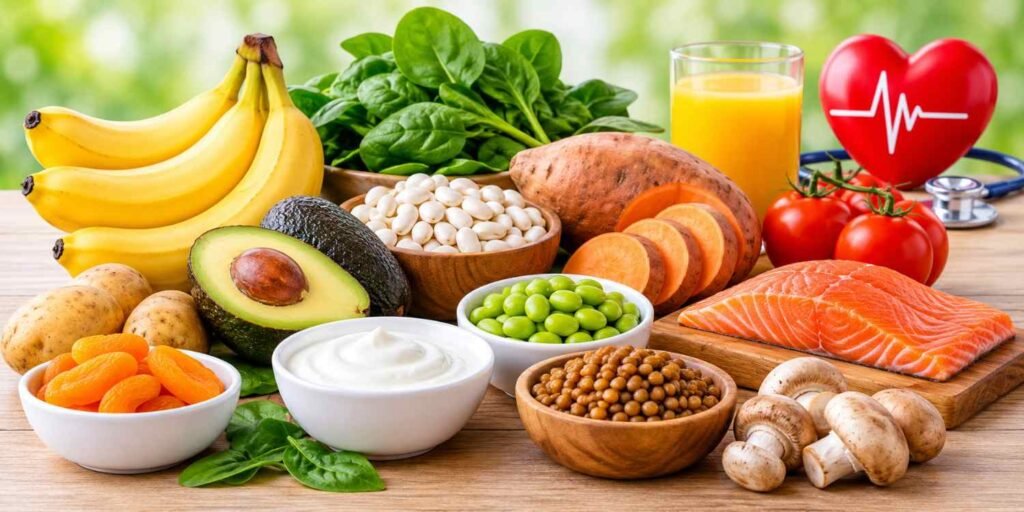
Here is a list of potassium foods featuring 15 of the best sources. These potassium-rich foods not only support heart health and healthy blood pressure, but are also full of other nutrients that benefit your overall wellness.
1. Bananas
Perhaps you know the banana as the ultimate natural, top-tier potassium bomb. But your average banana contains about 420 mg of the important nutrient. You also can’t pass up their portability or how easily they incorporate into almost any diet, especially a fruit smoothie.
2. Sweet Potatoes
A single medium sweet potato packs around 540 mg of potassium. In addition to being a great source of potassium, sweet potatoes are rich in fiber and vitamin A, making them a staple in many heart-healthy foods lists.
3. Avocados
Avocados are loaded with nutrients. A 3.5-ounce avocado contains around 975 mg of potassium. The medium avocado contains about 975 mg of potassium—more than twice the amount in a banana! They’re also high in heart-healthy monounsaturated fats.
4. Spinach
Cooked spinach delivers about 840 mg of potassium per cup. Leafy greens like spinach are powerful potassium-rich foods and also provide iron and fiber.
5. White Beans
Beans are among the most potassium-rich foods. One cup of cooked white beans provides nearly 1,000 mg of potassium. They’re also an excellent plant-based protein source.
6. Potatoes (with Skin)
A medium baked potato (with the skin) offers over 900 mg of potassium. Potatoes are versatile and filling, making them a key addition to any potassium foods list.
7. Tomato Products
5. Foods high in potassium include tomato paste, puree, and sauce. One cup of pureed tomatoes offers roughly 1,065 mg of potassium. A satisfying, tomato-based meal can enhance your dietary potassium.
8. Salmon
High in omega-3, salmon is jam-packed with healthful fats, and you’ll also find that it’s loaded with potassium. A three-ounce portion will provide around 470mg of potassium; as such, it’s typically high on any checklist of foods that are most effective for heart health.
9. Edamame
A cup of cooked edamame (soybeans) provides about 675 mg of potassium. Edamame is a protein-packed, potassium-rich food that’s easy to add to salads, stir-fries, or eat as a snack.
10. Yogurt
Low-fat yogurt packs about 570 mg of potassium per cup. Dairy products are often included in potassium foods lists because they’re also rich in calcium and protein.
11. Orange Juice
One cup of orange juice contains around 470 mg of potassium. It’s a refreshing way to get more potassium-rich foods into your diet, especially at breakfast.
12. Swiss Chard
A cup of cooked Swiss chard contains roughly 960 mg of potassium. This leafy veggie is packed with goodness and is an easy, important addition to any potassium foods list.
13. Mushrooms
Certain mushrooms, such as portobello and white button, are surprisingly high in potassium. One cup cooked can contain 555 mg of potassium.
14. Lentils
A cup of cooked lentils provides about 730 mg of potassium. The lentils are also packed with fiber and protein, making them a favorite in vegetarian and heart-healthy food recipes.
15. Dried Apricots
Just half a cup of dried apricots offers about 755 mg of potassium. Dried fruits are convenient and nutrient-dense, but remember to watch portion sizes due to their sugar content.
Click to Watch More. Learn More. Live Better! Explore Our Videos & Subscribe to Our YouTube Channel.
How to Include Potassium Rich Foods in Your Diet
We’ve included these useful tips for you to easily step up your consumption of potassium-rich foods and get all sorts of potassium benefits:-
- Add sliced bananas or dried apricots to your morning oatmeal.
- The top-rated salads that contain any cooked bean, edamame or avocado.
- Blend spinach or Swiss chard into smoothies.
- Serve salmon or lentils as a main dish for dinner.
- Snack on yogurt with fresh fruit
- Use tomato-based sauces for pasta and other dishes.
Potassium and Heart Health: What the Research Says
Research consistently shows a strong link between diets rich in potassium-rich foods and improved heart health. Potassium helps relax the blood vessel walls, which reduces strain on the cardiovascular system. It also helps the body eliminate excess sodium—a major contributor to high blood pressure—through urine. As a result, people who consume more Foods high in potassium are less likely to develop hypertension and cardiovascular disease.
Additional Heart Healthy Foods to Pair with Potassium
If all alone, potassium-rich foods are extremely effective, but they can become more useful when consumed together with foods with the following components:
For a cheerful metabolism and body. Some have: Fiber (oats, all produce, all veggies); Omega 3s (oily fish, plant-based diet (flax seeds, nuts); green food drinks, dark chocolate, berries, fish oil). This is intended to slow things down.
This holistic approach supports optimal cardiovascular function and overall wellness.
Potassium Foods List: Quick Reference Table
Here’s a list of foods high in potassium to make it easier to use. (As a matter of fact, the format is limited to the following listing for technical reasons.)
- Incredibly Versatile Snack
- Bananas: 420 mg per medium piece
- Sweet potatoes 540mg/median
- Avocados: 975 mg per medium
- Spinach (cooked): 840 mg per cup
- White beans: 1,000 mg per cup
- Potatoes (with skin): 900 mg per medium
- Tomato puree: 1,065 milligrams per cup
- Salmon: 470 mg per 3 ounces
- Edamame: 675 mg/cup
- Yogurt: 570 mg per cup
- Orange juice: 470 mg per cup
- Swiss chard (cooked): 960 mg per cup
- Mushrooms (cooked): 555 mg per cup
- Cooked lentils:730 mg/cup
- Dried apricots: 755 mg per 1/2 cup
Also Read: 15 Signs for Low Magnesium and Magnesium Rich Foods
Precautions: Who Should Be Careful with Potassium Rich Foods?
While potassium-rich foods are beneficial for most people, those with kidney disease or certain medications (such as ACE inhibitors or potassium-sparing diuretics) may need to limit their potassium intake. Always consult your healthcare provider before making significant changes to your diet, especially if you have a medical condition.
Final Thoughts: Prioritize Potassium Rich Foods for a Healthier Heart
Incorporating a variety of potassium-rich foods into your diet is a simple and effective way to support heart health and help manage blood pressure. Use the potassium foods list above to plan your meals and enjoy the many potassium benefits these foods offer. Remember, a balanced diet—rich in fruits, vegetables, whole grains, and lean proteins—is the foundation of long-term health.
By making foods high in potassium a regular part of your eating habits, you can take a major step toward a healthier, happier heart.
Frequently Asked Questions about Potassium-Rich Foods
What are the symptoms of potassium deficiency?
Symptoms of low potassium (hypokalemia) include muscle weakness, cramps, fatigue, irregular heartbeat, and constipation. Including more potassium-rich foods can help address mild deficiencies.
Is it possible to get too much potassium?
Yes, excessive potassium intake (usually from supplements, not food) can be harmful, especially for those with kidney issues. Stick to dietary sources and follow your doctor’s recommendations.
Are bananas the best potassium rich food?
Bananas are a good source, but many other potassium-rich foods (like beans, potatoes, and leafy greens) provide even more potassium per serving.
How can I create a balanced, heart-healthy meal?
You want to include at least one potassium-rich food along with other heart-healthy foods (lean protein, whole grains, healthy fats) at each meal.