Introduction of Indian Sarees
Indian Sarees are more than just clothing they are a symbol of our tradition, culture and elegance. Satika rich past and variety in style makes it the most adaptable garment for any occasion. This guide is to inform the buyer of the many types of fabrics, regions, and styles of Sarees out there which in turn will help them in making informed purchase decisions.
Fabrics
- Cotton
Cotton sarees are also very much a part of daily wear because of their comfort and breathability. They do very well in our hot and humid weather. Within the cotton range we have Khadi, Bengal cotton, and Mysore cotton which have different textures and motifs. Also wearing of Khadi which is made from hand spun yarn is a sustainable choice that supports local artisans.
- Silk
Silk sarees are a symbol of luxury which we save for special occasions like festivals and weddings. The shiny material flows which in turn adds to the grace of the wearer. Also, each region has its own unique silk Satika which include Kanjivaram from Tamil Nadu, Banarasi from Varanasi and Tussah from Jharkhand. Each has its own set of exclusive weaving patterns and motifs.
- Georgette and Chiffon
These light fabrics are great for draping, and we see that georgette is a step up in weight from chiffon also which usually has very fine details and embroidery. Georgette does very well at parties and in the evening and is a fabric which brings together style and ease.
Sarees In Different Regions
- North India
North India is famous for its colorful sarees, especially the Banarasi saree in its gold and silver embroidery. North India also manufactures the beautiful Chanderi and Maheshwari Satika for their lightness and exquisite patterns. The Satika has predominantly traditional motifs from nature and mythology.
- South India
South Indian sarees which include the Kanjivaram type are known for their rich Satika and deep colors.The sarees are heavily zari worked and are specifically for wedding purposes. Mysore silk and Kerala’s Kasavu saree are other notable styles. The Kasavu saree is adorned with golden border.
- East India
The delicate and light weaves of renowned Tant and Jamdani sarees of Bengal are also well known. These sarees are in floral designs and are fit for both every day and celebration use. The beautiful Sambalpuri Satika of the state of Orissa are handloomed with classical Ikat designs.
- West India
The western sector of India also boasts palettes of sarees including the variegated Bandhani and Patola sarees of Gujarat. Bandhani sarees are renowned for their tie-dying and Patola sarees for theirdouble-ikat weaving. Nauvari saree of Maharashtra too is popular for being draped in the style of a dhoti and offering something new.
Styles of Sarees
- Conventional Draping Designs
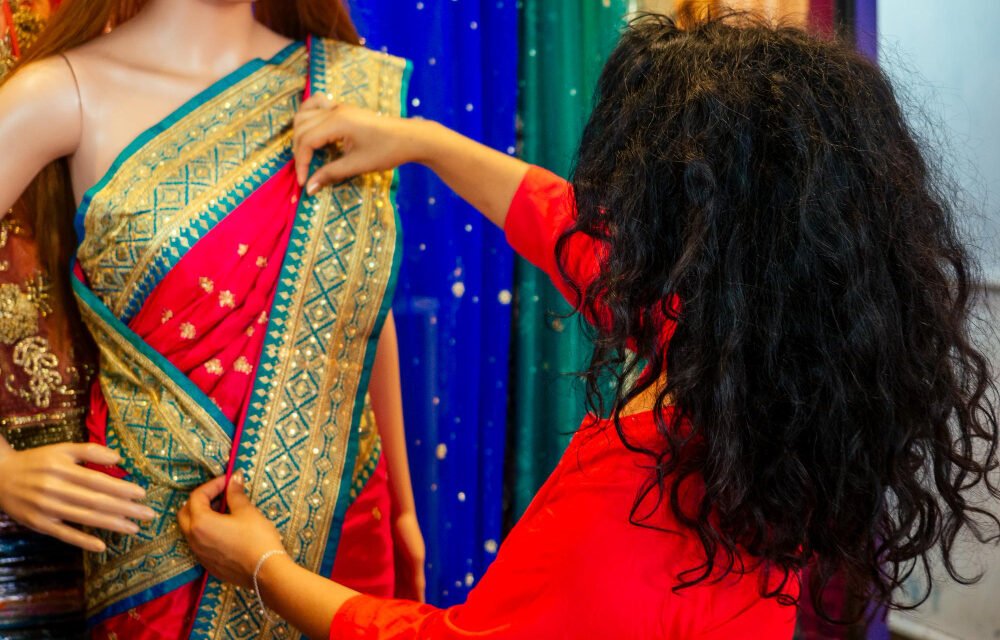
The style of saree can be altered significantly by its draping. The most widely used style is Nivi where the saree is pleated in the front and from there it is draped on the waist. In Bengali style, the Satika is placed on the left shoulder. In the Maharashtrian style, it is draped in the manner of a dhoti.
- Contemporary Styles
Today’s sarees also have modern-day styles and draping patterns. Designers experiment with fabric texture, color, and motifs to develop new-age pieces for the new generations. Pre-draped sarees are also becoming popular along with saree gowns offering both traditional and modernized appeal.
- Patterns and Embellishments
The sarees have embellishments on them, including embroidery work, sequins, and beadwork. Depending on what embellishments have been used, the overall looks of the Satika can be enhanced to become suitable for diverse purposes. From traditional patterns to today’s motifs, the customers can opt for what best suits them.
Also Read: “Jewels of India: How Indian Jewelry Reflects Culture and Ritual”
Conclusion
Choosing the perfect saree involves knowing the fabrics, regional style, and draping techniques. From silk’s richness to the softness of cotton, customers have something for every occasion. Becoming familiar with what’s available helps customers experience the creativity and skill in each item and have fun and satisfaction in purchasing their Satika.