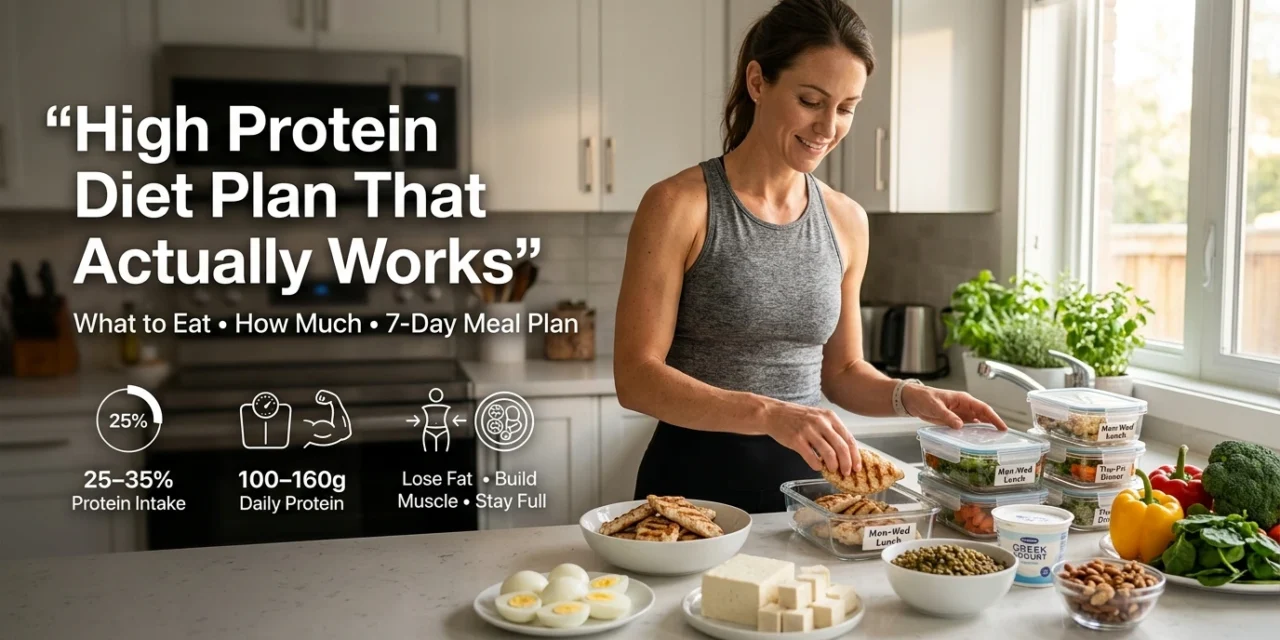
Quick Summary: A high protein diet plan means getting 25–35% of your daily calories from protein. For most adults, that’s roughly 100–160g of protein per day depending on your weight and goals. This article breaks down exactly what to eat, how much you need, and gives you a full 7-day meal plan to follow starting today.
If you’ve been trying to lose weight, build muscle, or just feel less hungry all the time there’s a good chance someone has already told you to “eat more protein.”
And honestly? They’re not wrong.
But here’s the thing most people don’t tell you: just knowing you should eat more protein isn’t enough. You need a plan. You need to know which foods actually count, how much protein your body needs based on your weight and goals, and what a realistic week of eating actually looks like.
That’s exactly what this article is going to give you.
We’ll cover the science without getting boring about it, go through the best high protein foods, and hand you a complete 7-day high protein meal plan you can start using this week. No guesswork, no complicated macros math just a clear, workable plan.
What Is a High Protein Diet, Exactly?
A high protein diet is pretty much what it sounds like a way of eating where protein makes up a larger-than-average share of your daily calories.
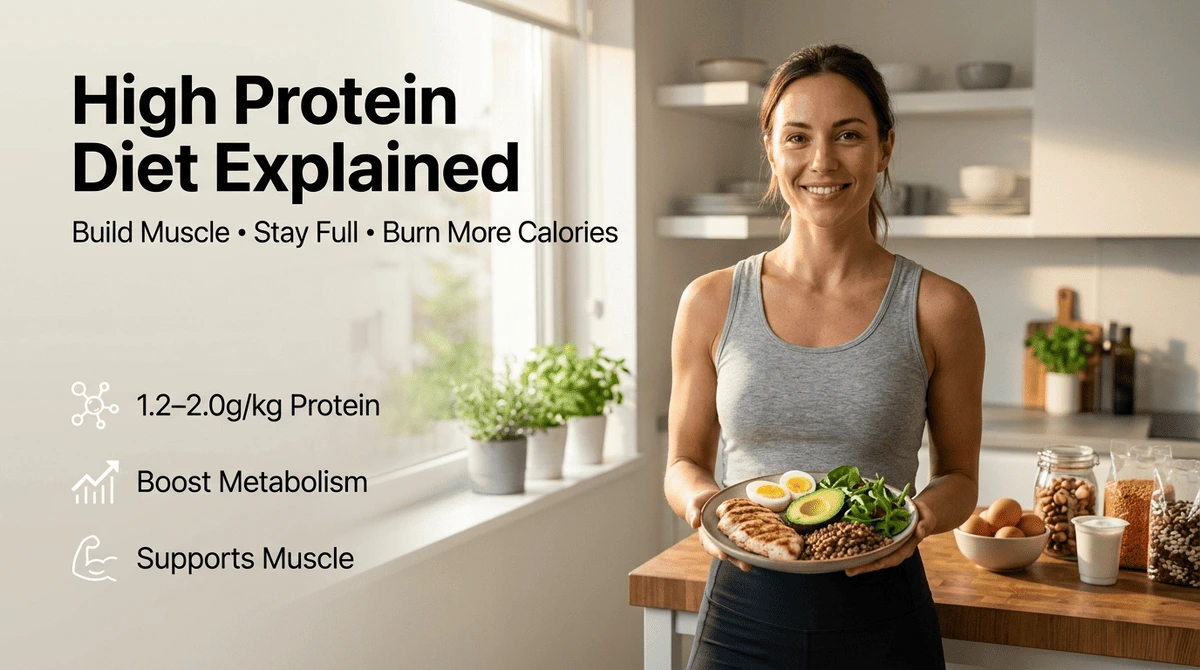
The standard dietary recommendation in the U.S. is about 0.8 grams of protein per kilogram of body weight per day. That’s the minimum to avoid deficiency. But the 2025–2030 U.S. Dietary Guidelines updated this, and most nutrition researchers and registered dietitians now recommend 1.2 to 1.6 grams per kilogram for active adults who want to manage their weight or support muscle.
For a 160-pound (72 kg) person, that works out to roughly 86–115 grams of protein per day on the conservative end, and up to 150+ grams if you’re actively trying to build muscle.
Here’s a quick way to estimate your personal target:
- Weight loss goal: Aim for 1.2–1.4g per kg of body weight
- Muscle building / body recomposition: Aim for 1.6–2.0g per kg
- General health and satiety: 1.0–1.2g per kg is a solid starting point

Why Does Protein Matter So Much?
Okay, let’s talk about why this actually matters — because once you understand what protein does in your body, it stops feeling like a diet rule and starts feeling obvious.
Protein keeps you full. Of all three macronutrients (protein, carbs, fat), protein has the strongest effect on satiety. It suppresses ghrelin — the hunger hormone — and boosts peptide YY, which signals fullness to your brain. That’s why a breakfast with 30g of protein keeps you going until lunch, while cereal leaves you starving by 10am. This is exactly why a well-structured High Protein Diet Plan is one of the most sustainable ways to manage hunger without constantly fighting cravings.
It boosts your metabolism. Protein has a high “thermic effect” — your body burns roughly 20–30% of the calories from protein just to digest it, compared to 5–10% for carbs. This means eating more protein can slightly but meaningfully increase the number of calories your body burns in a day.
It protects muscle when you’re in a calorie deficit. This one is huge. When you’re cutting calories to lose weight, your body tends to break down muscle for energy — unless you’re eating enough protein. High protein intake combined with even light resistance training is the most effective strategy for losing fat without losing muscle.
It supports recovery. Protein is made of amino acids, and amino acids are literally the building blocks your muscles use to repair themselves after exercise. If you work out regularly and aren’t hitting your protein targets, you’re slowing down your own progress. Following a consistent High Protein Diet Plan makes it significantly easier to hit those targets every single day without having to overthink every meal.
The Best High Protein Foods List
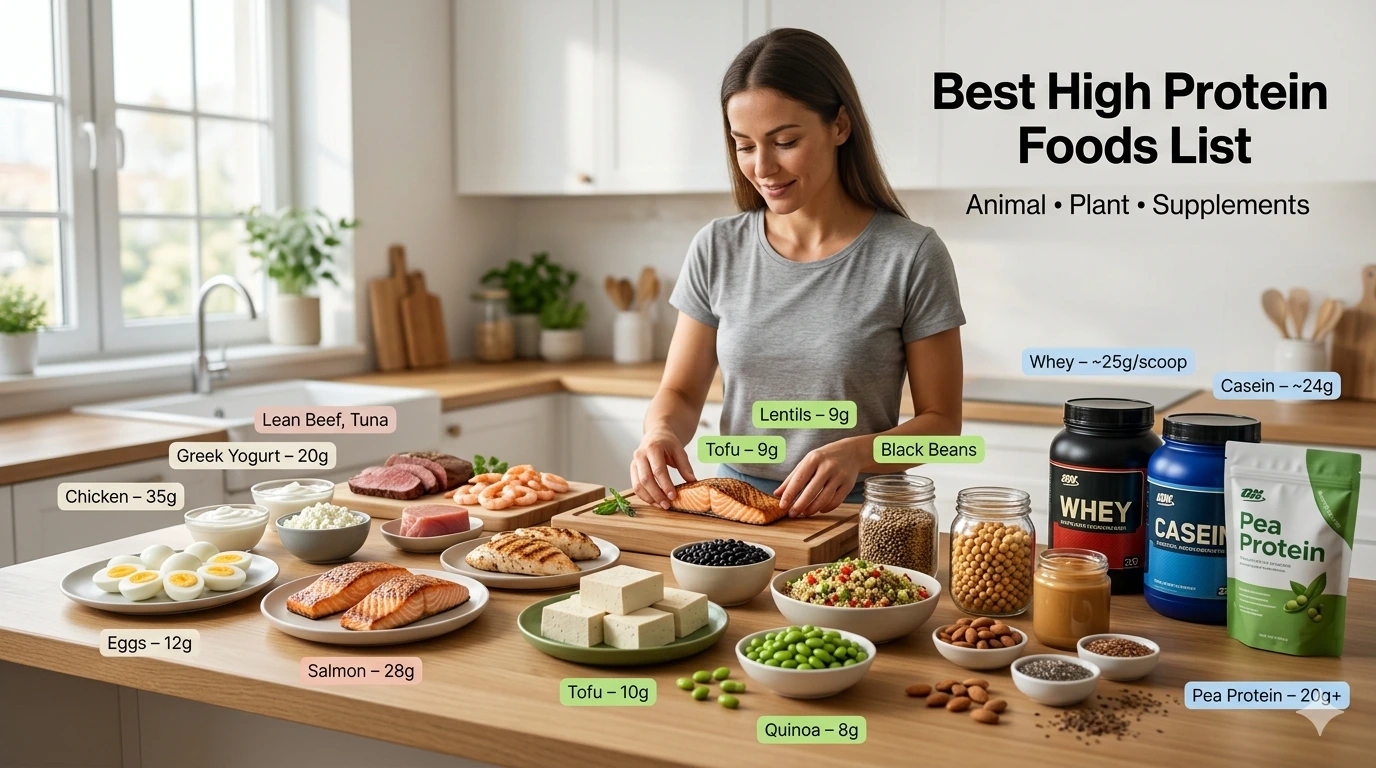
You don’t have to eat chicken breast every single day (thank goodness). Here’s a breakdown of the best protein sources across different food categories.
Animal-Based Protein Sources
These are the most efficient sources — meaning you get the most protein per calorie.
| Chicken breast (cooked) | 4 oz | 35g |
| Canned tuna (in water) | 1 can (5 oz) | 30g |
| Greek yogurt (plain, non-fat) | 1 cup | 20g |
| Eggs | 2 large | 12g |
| Cottage cheese (low-fat) | ½ cup | 14g |
| Salmon (cooked) | 4 oz | 28g |
| Ground turkey (93% lean) | 4 oz | 28g |
| Beef (sirloin, cooked) | 4 oz | 30g |
| Shrimp (cooked) | 4 oz | 24g |
| Low-fat milk | 1 cup | 8g |
Plant-Based Protein Sources
If you’re vegetarian, vegan, or just trying to eat less meat these have you covered.
| Edamame | ½ cup | 9g |
| Lentils (cooked) | ½ cup | 9g |
| Chickpeas (canned) | ½ cup | 7g |
| Black beans | ½ cup | 8g |
| Tofu (firm) | ½ cup | 10g |
| Tempeh | 3 oz | 16g |
| Pumpkin seeds | 2 tbsp | 5g |
| Peanut butter (natural) | 2 tbsp | 7g |
| Quinoa (cooked) | 1 cup | 8g |
| Hemp seeds | 3 tbsp | 10g |
Protein Supplements (Optional)
You don’t need supplements to hit your protein goals — you really can do it through whole foods alone. But if you’re busy or struggling to hit your numbers, these can help:
- Whey protein powder — fast-digesting, great post-workout. ~25g per scoop.
- Casein protein — slow-digesting, good before bed. ~24g per scoop.
- Pea protein — plant-based option, works well in smoothies. ~20–22g per scoop.
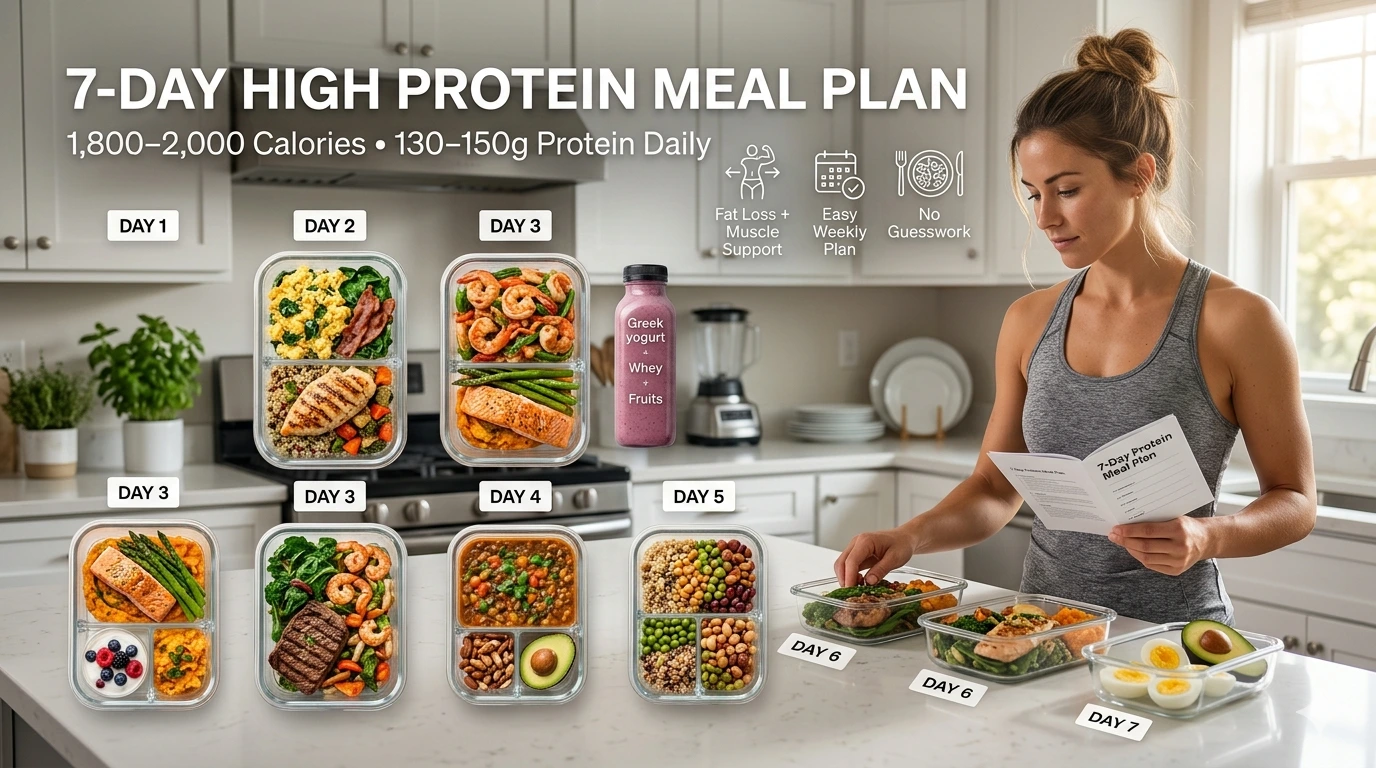
7-Day High Protein Meal Plan Approx. 1,800–2,000 Calories
This plan is built around roughly 130–150g of protein per day — which puts it firmly in the high protein range for most adults. Calorie totals are approximate and you can adjust portions based on your own goals.
Day 1 — Monday
Breakfast (~35g protein)
- 3 scrambled eggs
- 2 slices turkey bacon
- 1 cup low-fat Greek yogurt with a handful of blueberries
Lunch (~38g protein)
- Grilled chicken breast over mixed greens, cucumber, cherry tomatoes, avocado
- 2 tbsp olive oil + lemon dressing
- 1 slice whole grain bread on the side
Dinner (~40g protein)
- 5 oz baked salmon
- 1 cup roasted broccoli
- ½ cup quinoa
Snack (~15g protein)
- ½ cup low-fat cottage cheese with sliced peach
Daily total: ~128g protein
Day 2 — Tuesday
Breakfast (~30g protein)
- Greek yogurt parfait: 1 cup plain non-fat Greek yogurt, ¼ cup granola, mixed berries
- 2 hard boiled eggs on the side
Lunch (~35g protein)
- Tuna salad wrap: 1 can tuna, light mayo, celery, mustard, in a whole wheat tortilla
- Side of baby carrots
Dinner (~42g protein)
- Ground turkey taco bowls: 5 oz lean ground turkey, black beans, brown rice, salsa, shredded cheese, jalapeño
Snack (~14g protein)
- 1 scoop whey protein in water or almond milk
Daily total: ~121g protein
Day 3 — Wednesday
Breakfast (28g protein)
- Protein smoothie: 1 scoop vanilla protein powder, 1 cup unsweetened almond milk, 1 banana, 1 tbsp peanut butter, handful of spinach
Lunch (38g protein)
- Chicken and veggie meal prep bowl: 5 oz grilled chicken, roasted sweet potato, steamed green beans, drizzle of tahini
Dinner (40g protein)
- 6 oz sirloin steak (grilled)
- Side salad with olive oil dressing
- 1 ear of corn
Snack (~12g protein)
- String cheese + a small apple
Daily total: ~118g protein
Day 4 — Thursday
Breakfast (~32g protein)
- Overnight oats: ½ cup oats, 1 cup low-fat milk, 1 scoop protein powder, chia seeds, cinnamon. Prep the night before.
Lunch (~36g protein)
- Shrimp stir-fry: 5 oz shrimp, mixed bell peppers, snap peas, soy sauce, garlic, over ½ cup brown rice
Dinner (~40g protein)
- Baked chicken thighs (skin-off) with lemon-garlic marinade
- Roasted zucchini and mushrooms
- Side of lentil soup
Snack (~16g protein)
- ¾ cup cottage cheese with cucumber slices and everything bagel seasoning
Daily total: ~124g protein
Day 5 — Friday
Breakfast (~30g protein)
- 3-egg veggie omelet (spinach, mushrooms, onion, feta cheese)
- 1 slice whole grain toast
Lunch (~35g protein)
- Turkey and hummus wrap: 4 oz sliced turkey breast, 2 tbsp hummus, romaine, roasted red peppers, in a whole wheat tortilla
Dinner (~42g protein)
- 5 oz tilapia (pan seared with olive oil and garlic)
- 1 cup steamed edamame
- Roasted cauliflower with parmesan
Snack (~15g protein)
- 1 cup low-fat Greek yogurt with 1 tsp honey
Daily total: ~122g protein
Day 6 — Saturday
Breakfast (~35g protein)
- Protein pancakes: 1 scoop vanilla protein powder, 1 banana, 2 eggs — blend and cook like regular pancakes. Top with fresh berries.
Lunch (~38g protein)
- Cobb salad: grilled chicken, hard boiled egg, bacon crumbles, avocado, blue cheese, cherry tomatoes, mixed greens, ranch dressing (light)
Dinner (~44g protein)
- Ground beef (90/10) burger — lettuce wrap instead of bun if you want lower carbs, or whole wheat bun
- Side of roasted sweet potato fries
- Cucumber and tomato salad
Snack (~12g protein)
- Handful of pumpkin seeds + 1 oz cheddar cheese
Daily total: ~129g protein
Day 7 — Sunday
Breakfast (~30g protein)
- Veggie scramble: 3 eggs, black beans, salsa, sliced avocado, served with a side of fresh fruit
Lunch (~40g protein)
- Meal prep for the week: big batch of grilled chicken, hard-boiled eggs, and a grain bowl with quinoa, roasted veggies, and chickpeas
Dinner (~42g protein)
- Slow-cooked pulled chicken (or pork loin) over cauliflower mash
- Roasted asparagus with lemon zest
- Side salad
Snack (~14g protein)
- Protein bar (look for at least 15g protein, under 10g sugar) or another Greek yogurt
Daily total: ~126g protein
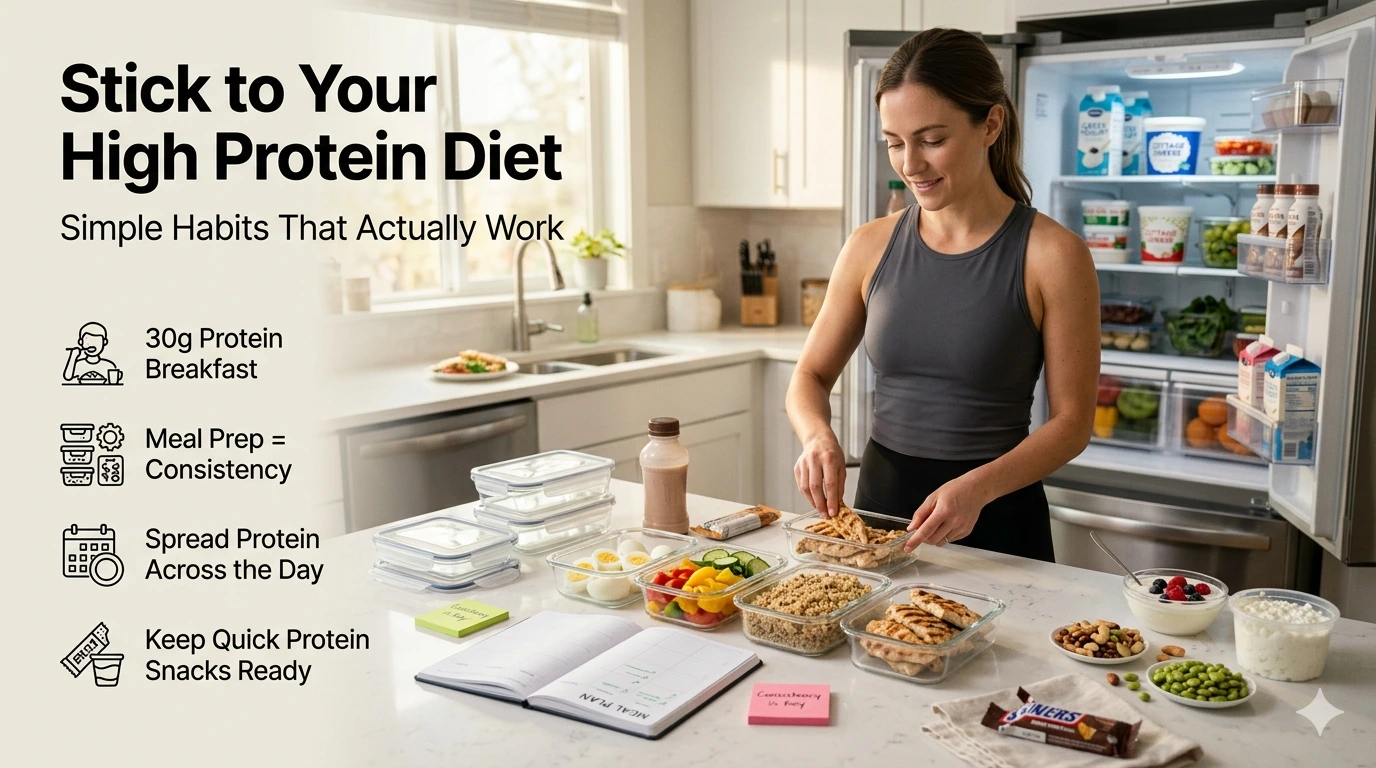
Tips to Actually Stick With a High Protein Diet plane
Look, knowing what to eat is the easy part. Actually doing it consistently — that’s where most people struggle. Here are a few things that make a real difference.
Front-load your protein early in the day. Try to get at least 30g of protein at breakfast. Research consistently shows that starting the day with high protein reduces overall calorie intake throughout the day. This alone is a game changer for a lot of people.
Meal prep on Sundays. Spend an hour on Sunday grilling a batch of chicken, boiling eggs, portioning out snacks. When high protein food is already ready to eat in your fridge, you’re way less likely to grab something convenient and low-protein.
Spread protein across all three meals. Your body can only use about 30–40g of protein at one time for muscle protein synthesis. Eating 130g all at dinner doesn’t work as well as spreading it across breakfast, lunch, dinner, and a snack or two.
Keep a backup protein source around. Greek yogurt, cottage cheese, canned tuna, protein bars, string cheese — these are all fast, no-cook protein sources you can reach for when life gets busy. Having them stocked in your house makes it almost impossible to fall short of your daily goal.
Don’t stress about perfection. A day where you hit 100g instead of 130g is not a failure. Consistency over weeks and months matters way more than any single day.
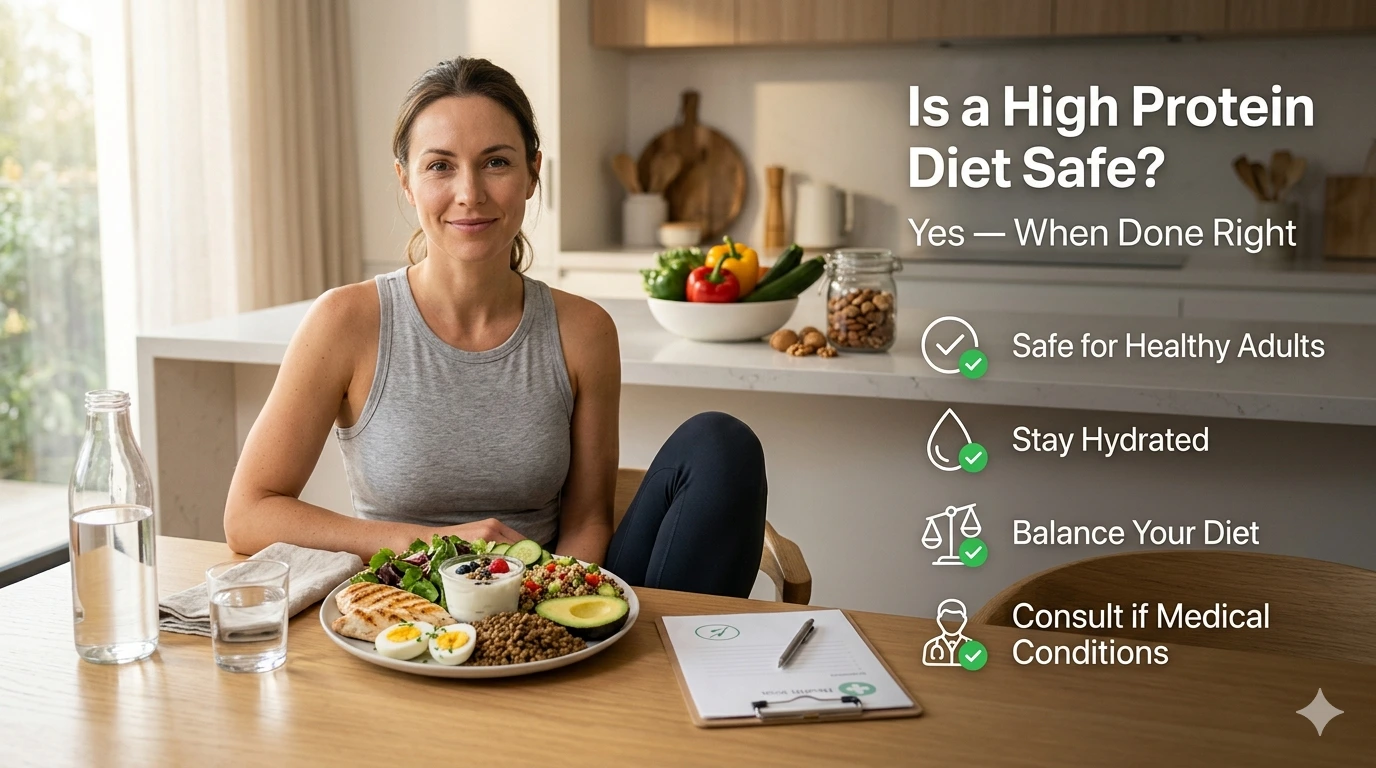
Is a High Protein Diet Safe?
This is one of the most common questions people ask — and the short answer is yes, for most healthy adults, a high protein diet is safe and well-tolerated.
The concern about protein and kidney damage is a real one, but the research is pretty clear: for people with healthy kidneys, high protein intake does not cause kidney damage. The restriction on protein applies to people who already have diagnosed kidney disease — not to healthy individuals.
Gout is another one worth mentioning. If you have a history of gout, very high intake of certain proteins (particularly organ meats and shellfish) can trigger flares — it’s worth talking to your doctor about this specifically.
For everyone else? The biggest “risk” is probably just not drinking enough water. Protein metabolism produces more waste byproducts than carb or fat metabolism, so staying well-hydrated is genuinely important when you’re eating high protein.
One more thing: high protein diets work best when they’re also balanced diets. You still need plenty of vegetables, fiber, healthy fats, and complex carbs. “High protein” doesn’t mean “only protein.”
Frequently Asked Questions
How much protein do I actually need per day? For a sedentary adult, the minimum is about 0.8g per kg of body weight — but most nutrition experts now recommend 1.2–1.6g per kg for active adults who want to manage weight or support muscle health. A 150-pound person would aim for roughly 82–109g per day at minimum, and up to 136g+ if they’re lifting weights regularly.
Can I build muscle on a plant-based high protein diet? Yes, absolutely — but it takes a bit more planning. Plant proteins are generally less “complete” than animal proteins (meaning they don’t always contain all essential amino acids), so you want to eat a variety of plant protein sources throughout the day. Combining legumes with grains (like rice and beans) is the classic strategy for covering all your amino acids.
When is the best time to eat protein? Honestly, total daily intake matters more than timing. That said, eating protein within 1–2 hours after a workout is beneficial for muscle repair, and eating a protein-rich breakfast has been shown to reduce hunger and calorie intake throughout the rest of the day.
Will eating too much protein make me fat? Any macronutrient eaten in excess can contribute to fat gain — protein included. That said, protein is the least likely of the three macronutrients to be stored as fat. It has a high thermic effect and is very filling, so overeating protein is much harder to do than overeating carbs or fat.
Do I need protein supplements to hit my goals? No — you can absolutely reach your protein targets through whole foods alone. Supplements are convenient and useful when life gets busy, but they’re not necessary. If you’re consistently hitting 130–150g per day through food, a protein shake isn’t going to move the needle in any meaningful way.
The Bottom Line
A high protein diet plan isn’t a fad. The evidence behind it — for weight loss, muscle retention, metabolic health, and satiety — is really solid, and the updated 2025–2030 U.S. Dietary Guidelines back it up.
The key things to remember:
- Aim for 1.2–1.6g of protein per kg of body weight daily
- Spread protein throughout the day across three meals and snacks
- Prioritize whole food protein sources — chicken, fish, eggs, Greek yogurt, legumes
- Meal prep is the single most effective strategy for staying consistent
- It’s safe for most healthy adults — just stay hydrated and keep your diet balanced
Start with the 7-day meal plan above. Follow it for one week. See how you feel. Most people notice less hunger, more energy, and better body composition within 2–3 weeks of consistently eating this way
- How Many Calories Should You Eat to Lose Weight? A Simple Guide
- Meal Prep for Beginners: How to Spend 1 Hour on Sunday and Eat Well All Week
- High Protein Low Carb Meals: 15 Easy Dinner Ideas