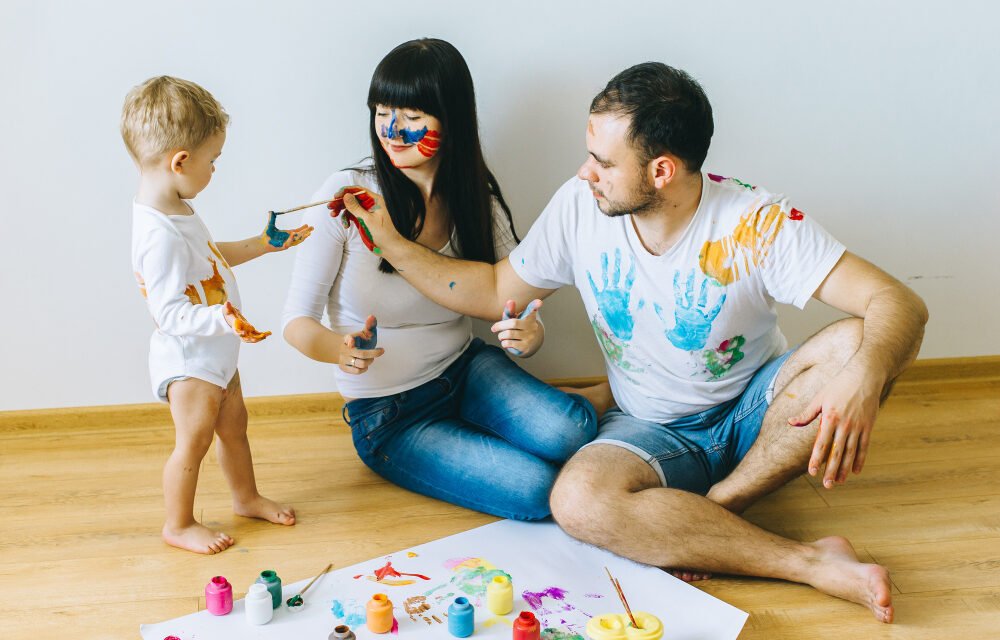
How Positive Parenting Turns Play into Learning
Parents all over would love to get their toddlers a head start, and the power of positive parenting provides an easy way. By integrating learning into everyday play, you turn crayons, blocks, and laundry baskets into lively classrooms.
Also Read: Positive Parenting Tips: Raise Happy, Confident Kids with Care
Shapes, Colors, and Positive Parenting
First, consider the brain science. In the first five years, billions of neural connections form every second. When children sort by color or stack shapes, they build pathways that later support reading, math, and problem‑solving. Circles and squares prepare eyes for letters like o and p, while vivid hues sharpen attention and memory. Therefore, playful exposure now pays academic dividends
Turning Playtime into Lessons: A Positive Parenting Approach
Then, maintain every interaction active. Say what you see: “You put the red triangle on the tall blue rectangle.” Ask open questions like “Which block can fit over this circle?” Your descriptive language nourishes vocabulary, and your questions ignite reasoning. Plus, celebrate small victories with high-fives and grins. This positive reinforcement demonstrates the power of positive parenting again, encouraging children to reach a little further.
Daily Things That Do Wonders
Best of all, you don’t have to shell out high prices for gadgets. Instead, organize a color scavenger hunt: give your child a sheet of rainbow stickers and challenge them to mark corresponding items in the home. And have a “shape picnic.” Cut sandwiches into shapes like circles, squares, and stars; then discuss sides and corners as you snack together. Similarly, turn over picture books with strongly colored illustrations, such as Eric Carle favorites. Reading out loud combines literacy with visual context, and once more the power of positive parenting drives engagement and fun.
Creating a Learning-Rich Home
Since setting matters, mark toy boxes with a picture as well as the printed word—Blocks, Cars, Puzzles. As a result, children learn to categorize while catching sight of written language. Tape a painter’s-tape triangle on the floor and turn it into a game of hopscotch; while children jump, they call out the name of the shape, associating movement with memory. Suspend a paper color wheel and allow small hands to clip clothespins to the correct color. Every rapid success builds confidence, and you, the cheerful coach, maintain momentum.
Overcoming Common Hurdles
Occasionally children confuse shapes or tire easily. When that happens, shift smoothly. Provide a brief song about colors and then come back energized. Implement gentle redirecting: “You nearly did it—turn the block this way.” By conceptualizing errors as stepping-stones, you highlight the power of positive parenting a fourth and last time, imparting resilience in addition to content.
Establishing Routine To-Dos
In addition, consistency converts disjointed lessons into enduring knowledge. Create a short “shape and color time” immediately following breakfast. In this ten‑minute routine, look back at yesterday’s findings and present a new challenge—sorting buttons by color or drawing a new polygon on a chalkboard. Since children expect the routine, their minds prepare for learning before you even start. These daily sparks build up over time, much like compound interest, and your child’s repertoire expands richer through seamless repetition.
Conclusion
Finally, those early lessons in color and shape demand no equipment—only intention, passion, and routine. Begin today: sort socks by color, draw cookie cutters in dough, or identify the geometric tiles on the pavement. Each small moment builds into rich neural development, social poise, and a true affection for learning. With intentional practice and a playful heart, you will color your child’s future in every vibrant hue conceivable.
Also Read: Time for Your Toddler While Caring for Newborn