We’ve all been there; you start your day with a decent breakfast, have a few hours’ energy, and then all of a sudden you’re famished again, digging around the cupboards for an afternoon snack. More often than not, it’s not a question of how much food is entering your body, but how much is actually making you feel satisfied.
There’s one simple thing that can make a big difference in how you feel: fiber. Adding more high-fiber foods to your diet isn’t just good for digestion. These best high-fiber foods also help you feel satisfied for longer, support a healthier gut, and make it easier to skip unnecessary snacks during the day. The best part? You don’t need expensive supplements or a complicated meal plan. Many everyday foods are naturally high in fiber and fit right into your regular meals.
In this guide, we’ll look at some of the best high-fiber foods, explain how these foods for digestion work, and share practical ways to add more of them to your meals-without feeling like you’re on a strict diet.
Why Is Fiber So Important?
Fiber is a kind of carbohydrate that your body can’t actually break down all the way. Unlike most nutrients, fiber moves through your body slowly, and that is part of why it’s so helpful for your health.
As fiber travels through your system, it helps maintain movement, supports regular bathroom trips, and gives the good bacteria in your gut something to munch on. It also slows down digestion a bit, so you feel full longer after a meal. That’s why people who eat plenty of fiber often find it easier to manage their appetite and keep their energy steady throughout the day.
Signs You May Not Be Getting Enough Fiber
Most adults don’t eat as much fiber as they should.
A Diet Low in Processed Foods: If your diet consists largely of processed foods and/or refined carbs, chances are you are not getting enough of this crucial mineral.
Some usual signs include:
- Feeling hungry soon after meals
- Occasional constipation
- Low energy during the day
- Frequent cravings for sweet snacks
- Digestive discomfort or bloating
Of course, these symptoms can pop up for lots of reasons. Still, adding more high-fiber foods to your plate is usually a simple first step.
How High Fiber Foods Benefit Your Body
Fiber does much more than improve digestion. It also supports several other important functions in your body.
Fiber helps in lots of ways—not just with digestion.
Better Digestion
One of the biggest reasons people choose high-fiber foods is to help their digestive system work more efficiently. Fiber bulks up what’s in your gut, making it easier to go to the bathroom and keeping things regular. It also helps keep the bacteria in your gut balanced, which is important for good digestion.
Helps You Stay Full Longer
Ever wonder why a bowl of oatmeal keeps you satisfied longer than a sugary pastry?
The answer is fiber.
Foods with a lot of fiber take longer to digest, so you stay full between meals instead of feeling hungry right away. That’s why nutrition experts often say to choose foods that really fill you up, not snacks that leave you hungry again soon after.
Maintains Heart Health
Many high-fiber foods naturally contain vitamins, minerals, and antioxidants that support heart health. Whole grains, beans, fruits, and vegetables have all been linked to healthier cholesterol levels as part of a balanced diet.
Supports a Healthy Gut
Your gut is home to trillions of bacteria. Some are helpful, while others can become harmful if they’re not kept in balance. Many healthy gut foods fuel the beneficial bacteria in your digestive system. When these bacteria thrive, they support digestion, immune function, and general well-being.
The Best High Fiber Foods to Add to Your Diet
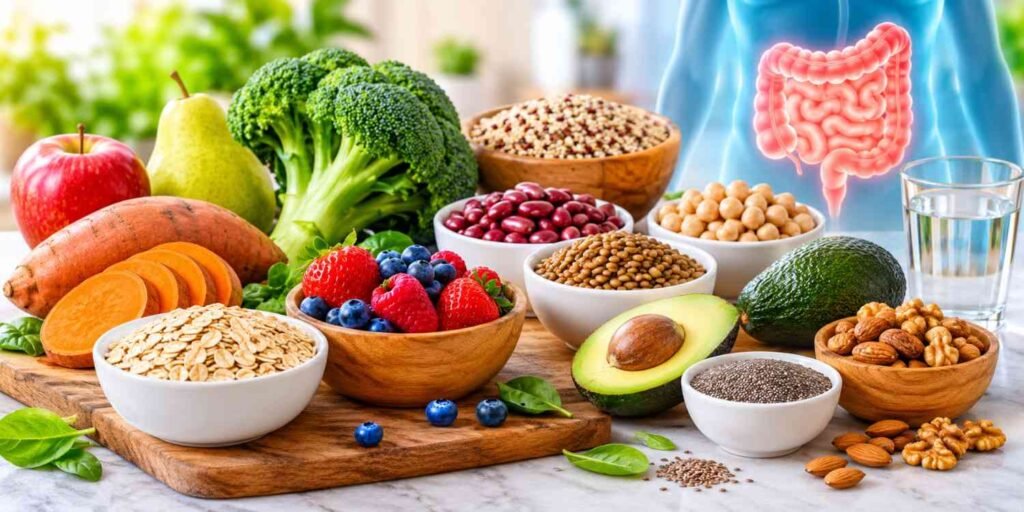
The easiest way to get more fiber is to mix whole foods into your week.
Here are some of the best choices.
1. Oats
Oats are one of the simplest and best high-fiber foods you can eat. They’re affordable, easy to prepare, and incredibly versatile.
However you enjoy them-whether they’re at the start of the day, served piping hot in a bowl, stirred into baked treats, or blended into a nourishing smoothie-you know that you’re getting the satisfying fiber and sustained energy. A bowl of oatmeal in the morning can help reduce mid-morning hunger while supporting healthy digestion.
2. Lentils
Lentils are packed with rich fiber, plant-based protein, vitamins, and minerals. They’re an excellent addition to soups, curries, salads, and grain bowls. Because they contain both protein and fiber, lentils are among the best foods that keep you full for hours. They’re especially useful if you’re trying to reduce unhealthy snacking throughout the day.
3. Apples
The saying “an apple a day” has lasted for a reason.
Eating Apples: They are high fiber (especially the skin of the apple) and natural antioxidants. Instead of peeling your apple, try eating it whole to maximize its fiber content. Pairing apple slices with peanut butter also creates a satisfying snack that combines fiber with healthy fats.
4. Chia Seeds
Tiny but incredibly nutritious, chia seeds absorb water and form a gel-like texture as they move through digestion. This helps slow digestion and promotes feelings of fullness. Sprinkle them into yogurt, oatmeal, smoothies, or overnight oats for an easy fiber boost. They’re an easy, healthy gut food to add to your daily routine.
5. Broccoli
Broccoli isn’t just rich in vitamins. It’s also one of the best foods for digestion because of its impressive fiber content.
Roasted, steamed, or added to stir-fries, broccoli is an easy way to increase your vegetable intake while supporting your digestive system.
6. Pears
Pears are naturally sweet, juicy, and packed with fiber.
Like apples, much of their fiber is found in the skin. Eat them whole or raw for snacking; you could also slice and serve them in salads to impart flavor and texture. Because pears digest slowly, they’re another excellent example of food that keeps you full without relying on processed ingredients.
7. Beans
Beans are among the most affordable and nutritious foods. They are high-fiber foods you can add to your diet. Whether you choose black beans, kidney beans, chickpeas, or cannellini beans, they’re packed with fiber and plant-based protein.
They work well in soups, salads, wraps, and homemade tacos. Since they digest slowly, they help you stay full and provide steady energy throughout the day.
8. Avocados
Avocados are known for their healthy fats, and they’re also a great source of fiber. Adding a few slices to toast, salads, or sandwiches can make a meal more satisfying. The blend of fiber and healthy fats helps reduce hunger and supports heart health. If you’re looking for foods that keep you full, avocados deserve a place on your shopping list.
9. Sweet Potatoes
Sweet Potatoes: I love my sweet potatoes – they are delicious, nutritious, filling, and my ultimate feel-good food.
They kept me feeling full all the way up to late in the afternoon, as they are complex starchy carbohydrates, giving you plenty of time-released energy.
Steam, boil, mash, or roast sweet potatoes, then throw a little bit of your favorite spices on top to taste.
10. Berries. Strawberries, blueberries, raspberries, and blackberries
Sweet, lightweight, and loaded with nutrients, berries make a healthy and refreshing snack or topping. You can top anything from your yogurt or porridge, or chuck a small punnet into your smoothie. Eat them as a healthy handful and be replenished.
11. Whole grains
Next, try whole grains, too.
One of the easiest ways to boost your fiber is to substitute refined grains with whole grains.
Whole-wheat bread, brown rice, quinoa, barley, and whole-grain pasta all have more fiber than their white, processed versions.
Making this simple swap can improve digestion without changing your meals too much.
12. Nuts and Seeds
Eating a little but highly nutritious mix of seeds and nuts like almonds, walnuts, flax, pumpkin, and sunflower will not only do wonders for the heart but also for overall health.
The healthy fats in nuts and seeds, along with their protein, can help keep you satisfied until your next meal.
A small handful makes a handy snack, especially during busy days.
How Foods for a Happy Gut Help With Digestion
Your digestive system does much more than break down food. It’s home to trillions of beneficial bacteria that help digest nutrients, support your immune system, and influence your mood.
These helpful bacteria need fuel to thrive. That’s where healthy gut foods come in. Natural fiber acts as food for these beneficial bacteria. As they grow, they produce compounds that support a healthy digestive system and may help reduce discomfort. That’s why eating more foods for digestion and healthy gut foods can make such a difference.
If you’re eating an array of fruits, veggies, legumes, whole grains, seeds, and nuts, then you’re giving your gut the building blocks for that healthy microbiome to exist.
The more variety you eat, the better your gut tends to feel.
Why Foods That Keep You Full Can Help With Healthy Weight Management
Many people think losing weight means eating less. In reality, it’s often about eating smarter. Eating foods that fill you up will naturally reduce your desire to reach for snacks all day long. When meals contain enough fiber, they stay in your digestive system longer. As a result, you feel satisfied longer, rather than reaching for another snack an hour later. Over time, these small choices can support healthy eating habits without leaving you feeling deprived.
Common Mistakes People Make
Even healthy eating comes with a learning curve. Here are a few common mistakes to avoid.
Depending on Fiber Supplements
Supplements aren’t entirely without merit, but they’ll rarely make up for the benefits of nutrient-rich whole foods containing vitamins, minerals, and antioxidants. Whenever possible, get your fiber from real food.
Ignoring Fruits and Vegetables
Whole grains are important, but fruits and vegetables are equally valuable sources of fiber. Aim for a colorful variety throughout the week.
Forgetting to Drink Water
Fiber and water work together. Without enough fluids, increasing fiber may actually slow digestion rather than improve it.
Going With Processed “Health Food” Snacks
Beware, because some so-called healthy, fiber-rich packaged foods are packed with added sugar. Your nutrition label reading skills will come in handy.
Final Thoughts
Eating more high-fiber foods doesn’t mean you have to change your whole lifestyle. The tiny tweaks can make the biggest difference. Trading your white bread for whole grains, adding some fruit to your breakfast, or serving up some beans with your meal can gradually shift your digestive system toward a healthier state.
The best part is that these foods give more than just better digestion. Many high-fiber foods also benefit heart health, provide steady energy, and help you feel satisfied between meals. Instead of stressing about restrictive diets, try focusing on adding more nourishing foods to your plate. Your digestive system—and the rest of your body—will thank you.
Frequently Asked Questions
1. Top High-Fiber Foods To Have Daily.
The daily dietary fiber requirement may increase; it’s a good idea to include high-fiber foods like oats, lentils, beans, apples, pears, broccoli, berries, chia seeds, whole grains, almonds, and walnuts in your everyday meals. Adding variety and fiber-rich foods like these helps support my need to increase my daily fiber intake and can boost your daily fiber intake and support healthy living.
2. How do fiber-rich foods improve digestion?
High-fiber foods keep things progressing smoothly in your digestive system, help you stay regular, and also give the good bacteria in your gut something to feed on. This all adds up to a happier, healthier digestive system.
3. Which foods that keep you full are also healthy?
Oats, beans, lentils, avocados, sweet potatoes, nuts, and apples all help you feel fuller longer. This is due to all the fiber that you can find, along with protein and fat. You get all your nutrients without feeling full or sluggish later.
4. What are some of the best healthy gut foods?
Want to keep your gut happy? Load up on fruits, veggies, beans, whole grains, chia seeds, flaxseeds, and even fermented foods like yogurt. These all work together to support a balanced gut and better digestion.
5. How can I add more foods for digestion to my daily meals?
Start small—swap white bread for whole grain, toss some fruit into your breakfast, add veggies to every meal, and try beans or lentils a few times a week. Little changes like these can help you enjoy more foods that are great for your digestion, without feeling like you have to overhaul your whole diet at once.