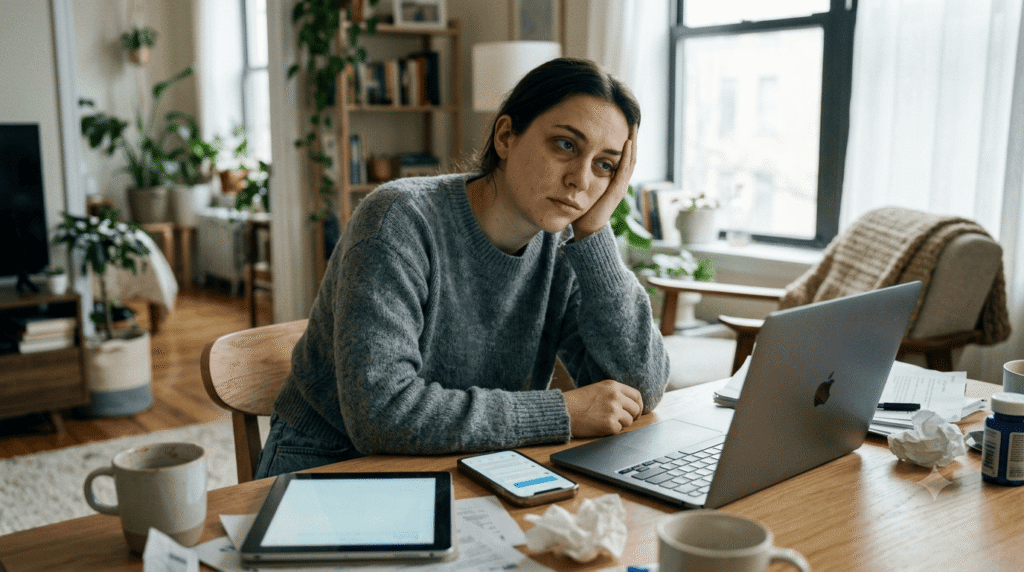
Today, the whole world around us is covered in screens of different sizes and shapes. Most of us use cell phones, laptops, tablets, and smart TVs at home, for work, for education, and to connect and communicate with our families and friends. The topic of Screen time and mental health is now more important than ever, as our daily routines revolve around screen-based activities.
Technology has been designed to make everything easier. However, excessive screen use can really affect our well-being.
Healthcare providers are concerned about what happens to our brains when we use screens a lot.
Many hours on screens can really change our brains and disturb our sleep patterns. Too much screen use can lead to sadness and stress. Too much time on screens will make us feel anxious and make it harder to focus. If we overuse our screens, it will feel like we are hooked on them.
Understanding how time on screens affects us will help us use them responsibly. Understanding will help us use them responsibly. Using too many screens affects the brain, sleep, and emotional well-being. Here, we are going to cover what exactly happens to us with screen time. We are also going to learn about the signs of phone addiction and social media stress. We will learn about digital burnout symptoms and how to prevent it.
We will also find some tips on managing our screen time so we don’t miss out on everything.
Screen Time & Mental Well-being
Screen Time means using any screen-based device, such as a telephone, tablet, TV, computer, laptop, or gaming console. Using these devices is only bad for you if you spend a lot of time online, as it takes time away from things such as sleeping, exercising, talking to people, and relaxing.
We have to think about how screen time can affect our mental well-being. If we use them all the time, we can overload our brains.
This can make us feel stressed, unable to concentrate, and feel that we lack control over how we feel. The more time we use them, the higher the chance we will experience poor mental well-being, which is similar to suffering from social media stress, loneliness, digital burnout symptoms, or depression.
One explanation for this is that most online services are designed to keep us there. Social networking has a lot of information and notifications, and also there is a lot to look at (e.g., videos, things to read), so we always have something to look at. Therefore, the more time we have online, the lower our mental well-being is. Screen time really can have a negative impact.
How Much Screen Time Affects Your Brain
Decreased Attention & Focus
You will notice that it is harder to stay attentive and focused on tasks if you use your screens for long hours. This happens when you yourself switch too easily from one application to another, such as checking messages, viewing photos, watching clips, and reading the text you need, all within minutes.
Your brain grows accustomed to doing various activities at the same time, causing you to seek immediate satisfaction rather than sustained engagement in one activity. Soon, it would be more difficult to focus on activities like reading, studying, or problem-solving. This is how screen time affects your brain’s attention.
Most of us tend to reach for our phones whenever we have a few seconds spare, just for a quick look. But it’s bad because it hinders your patience and focus. Eventually, you grow less productive and less insightful. This is also how screen time affects your brain.
Dopamine and Reward Dependency
Each notification that you get from devices, likes from posts, or a text that is sent to you causes the brain to secrete the chemical called dopamine. Dopamine is a feel-good chemical.
This makes you prone to checking devices and seeking another pleasant interaction. I mean, you may begin with constant rewards, but it is difficult to use the devices. Screen time is related to dopamine.
A common sign of cell phone addiction is grabbing the phone without reason or purpose at all. Many individuals take a peek at their phones hundreds of times a day, just out of habit. These are clear phone addiction signs. Screen time and mental health are directly linked, with excessive use contributing to negative outcomes.
Information Overload
While the Internet helps you obtain information quickly and efficiently, it may become a problem if it’s just too much.
You find yourself inundated with constant notifications from emails, social media updates, videos, ads, and text messages. In this case, the sheer amount of information you are taking in does not give you sufficient time to pause and process what you’ve learned. This is how screen time fills up your brain with information.
It has been observed that constant use leads to fatigue, poor focus, memory loss, and indecisiveness among individuals. The brain is overwhelmed by information overload. It is thus another way screen time affects your brain.
Increased Stress Response (Social media stress)
The pings and constant disturbances from digital media keep your brain on guard. Every vibration or alert makes you perceive that something significant has to be addressed right away.
This constant feeling of alarm, which may also trigger the production of stress hormones, does not give the mind enough time to unwind. This may eventually turn into chronic anxiety and emotional exhaustion over time. Screen time and mental health are closely related, as excessive exposure can increase social media stress and negatively impact your overall well-being.
How does Screen Time affect our quality of sleep?
Our sleep is vital for our overall well-being. Nowadays, people are complaining about how they sleep, and it is definitely due to our extensive use of screens.
How Blue Light affects sleep:
Our computers, mobile phones, televisions, and other screens emit blue light. This blue light is the key to disrupting our body’s sleeping patterns.
Normally, as night approaches, our brain produces a hormone called melatonin. Melatonin tells the brain that it is time to sleep, and it is released when the brain senses that the evening is beginning and there is not enough light. However, when we view screens, we are exposed to blue light, which tells our brain that it is still daytime, so we can not begin to release melatonin, resulting in sleep issues even when we are really tired and sleep-deprived.
Getting a delayed bedtime.
Most of us decide to spend a few minutes on media before we go to bed. We get addicted to scrolling, watching videos, and having long conversations with our friends online, resulting in more hours than we would like spent on these gadgets before we actually go to bed. The result of having a late bedtime is that we do not sleep as much as we should, and long-term sleep deprivation is known to cause negative effects on our mental and thinking capacity.
Mental health problems are associated with a lack of sleep.
If we cannot find ourselves in a situation that doesn’t involve sleep for long periods, our brain has more trouble regulating our emotions, and we may tend to:
- Feel irritable and moody.
- Experience more mood swings.
- Feel anxious.
- Experience more stress.
- Have difficulty concentrating and paying attention.
- Feel weaker than our usual selves.
These factors can lead to a detrimental cycle of prolonged screen time and lack of sleep, which can ultimately damage our health and directly affect our Sleep Quality. How social media affects our emotional well-being
We all use social media daily; it has become part of our lives, connecting us with friends and family all over the world. Overusing social media, however, affects our mental well-being in many negative ways.
This happens because we tend to compare our lives with others. We have countless pictures and stories shown in the media about other people’s achievements and happy lives. This media content may not always reflect a real-life picture, but these images can eventually lead to a feeling that others are happier and far better than oneself.
We do this every day, and eventually it’s going to affect our overall well-being and make us feel unhappy, anxious, and depressed.
Another thing that affects us is that we always feel the need to get connected online and reply to emails and messages on social media. This leaves us unable to take a break.
Social media may also be considered a stressful factor as people say unpleasant things about others online or broadcast news to others. This will somehow make us feel lonely, tired, and depressed even when we are in contact with countless people.
These are all the reasons why we should really care about the time we spend on the internet, how it affects us, and take a break from it.
What are the signs that you should not ignore if you have digital burnout symptoms?
Most of us feel tired every day, but physical fatigue is common, and that’s how digital burnout feels when you’re always on a screen.
Digital burnout is too much. This condition is really hard to detect when you’re using your screens to work, learn a new concept, study, or chat with friends.
The digital burnout symptoms are:
- Tiredness when using the computer or phone.
- The inability to concentrate properly on something.
- Lack of motivation in completing tasks.
- Feeling overloaded by an excessive amount of e-mail and messages.
- Easy frustration.
- Headaches and eye strain.
- Difficulty in taking a nap or relaxing without a screen.
- Feeling weary and disconnected.
The symptoms appear slowly and are easy to overlook, but if you notice these signs, you are heading towards digital burnout, and you have to make an effort.
The phone addiction signs you should look out for
The use of our mobile phones has reached the point where we could even get used to it in a particular manner. Our mobile phones may lead to phone addiction.
Some signs of it are using your phone even when there is no reason at all; you take it and flick it open, then leave it aside, but you can never resist checking it every minute or two.
Here are other signs that indicate phone addiction:
- Immediately call the phone after waking up.
- Feel anxious if you do not have your phone.
- Check your phone for any messages that you already know are none.
- Keep checking your phone during a meal or while in the middle of a conversation.
- Use your phone longer than you planned.
- Inability to be apart from your screens for a considerable amount of time.
- Feel bored and restless without a device on hand.
If you recognize that you are dependent on your phone, you are not the only one. Being aware of the signs of phone addiction is the first step. Simple solutions to control it include turning off notifications, taking some time off, and doing other things instead of spending time on your phone.
Here are ways to reduce screen time, as if you are missing out on something.
Many people who want to use their screens feel that if they do not, they will miss out.
They feel as if they are not connected to their screens; they feel like they know something, or everyone else knows everything. They are the last ones to know something about screen time.
The main thing is not to get rid of technology, but to use it.
When you do not use your screen for eating, do not use your phone for at least 30 minutes after you wake up, and take short breaks throughout the day, it helps to start small with screen time.
Other productive things you can do with your screen time that help your brain include:
- Going outside to get away from screen time.
- Reading a book to reduce screen time.
- Getting moving by doing exercise to take a break from screen time.
- Being mindful to reduce screen time.
- Being present with people you care about by talking to them in person reduces screen time.
- Engaging in a screen-based hobby to get away from screen time.
When you make a conscious effort to use less and less screen time every day, you start to sleep more, concentrate better, feel less stressed, and get things accomplished with less screen time.
Our culture and daily life have shifted because we rely on technology, and screens have changed the way we learn, work, and communicate with others about screen time and mental health.
Screen time can have very helpful effects on your mind, sleep, emotions, and physical well-being.
Problems that may arise when you use screens a lot include inability to focus, anxiety, addiction to the internet, and many others from too much screen time.
The good news is that awareness is the first step in using screens more responsibly by creating rules for technology use, setting screen time limits, scheduling screen-free time for other activities you enjoy, and using technology more as a tool rather than letting it control your life and screen time.
Remember that technology use should be useful, not a source of stress and worries from too much screen time.
Sleep better, focus more, and feel less stressed by changing your habits: screen time is one part of life and should not dominate everything.
You are the master of how much screen time you need.
FAQ
How often do I ask? Screen Time and Wellbeing
1. What is screen time?
The number of hours you spend viewing your screens, for example, phone screens, tablet screens, laptop screens, TV screens, and video game machines.
2. How is my mind affected by screen time?
Negative impact of excessive screen time on your mind: Excessive screen time can adversely affect your attention span and lead you toward an instant lifestyle due to the effects of digital media. Watching excessive online content could leave you exhausted.
3. What are the physical effects of screen time?
Physical effects of multiple screens: You will experience high stress levels, depression, and anxiety, even though you may be experiencing depression symptoms. It could make you feel lonely, leading to withdrawal from others.
4. How to cut back on screen time so as not to feel left out?
Working hours and eating hours. Do leave your phone in the room while you are eating, and try to do so for at least 30 minutes before sleep. Replace this time with other lifestyle activities to engage yourself, such as reading a story, talking to your dog or friends, playing outdoors, planning some fun activities, or talking with someone special.
5. What should I do if I’ve realized that I am too reliant on my gadget?
Practice turning off notifications, take time away from digital devices, and plan time away from them. Track your actual online hours, and look for information. Make a timetable for yourself to do that.
6. Are there any advantages of technology usage even without risking being beneficial?
Yes, there are definitely advantages, but in the best way, technology is just a platform for studying, communicating, or performing better at your work. So don’t get used to being managed by technology.